Data Governance Framework: A Practical Structure for Enterprises
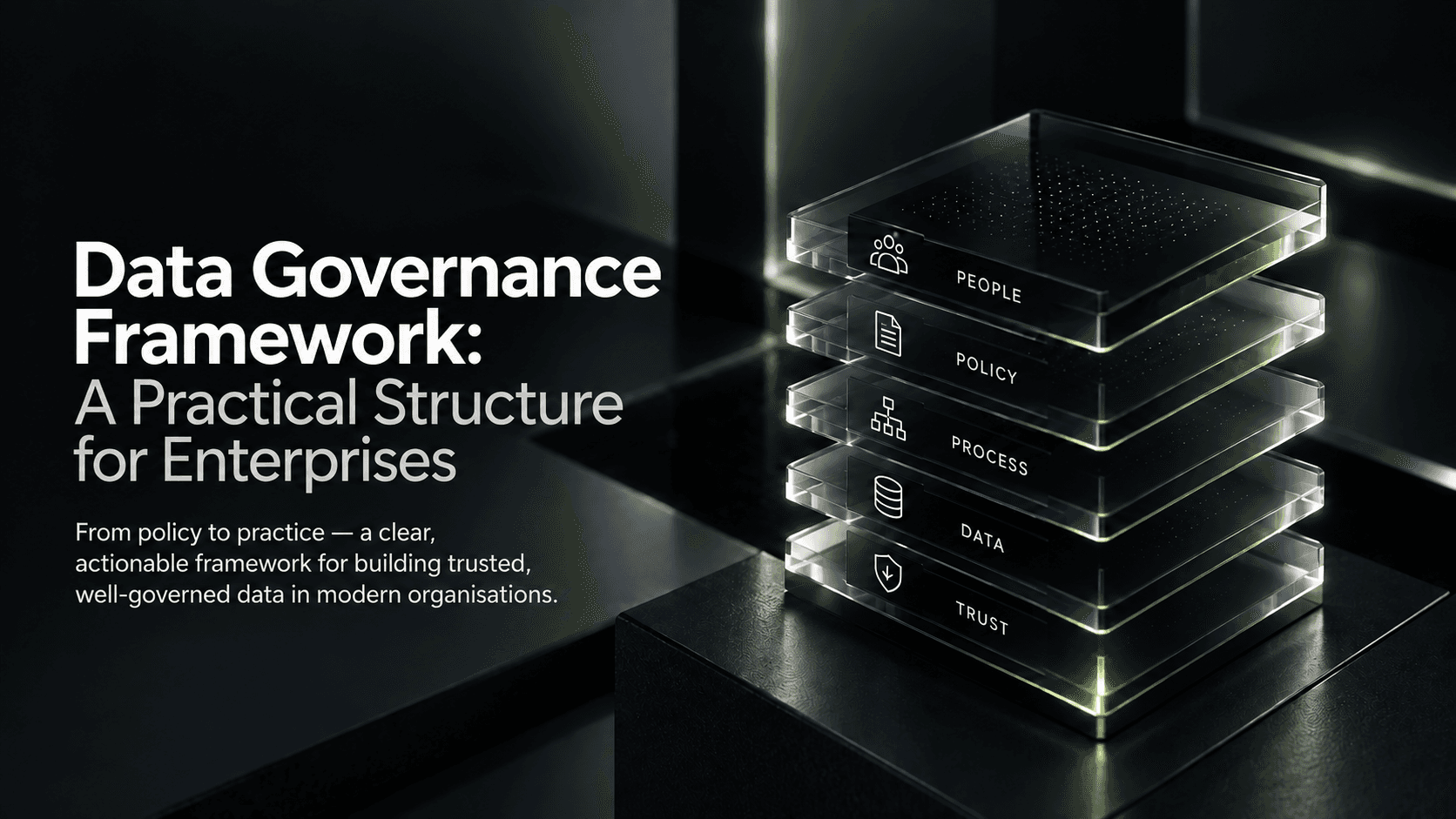
A data governance framework is the operating structure an organisation uses to turn governance principles into repeatable decisions, ownership, controls and evidence. It is not just a policy document. A useful framework connects people, data assets, rules, processes and technical controls so governance can be applied consistently across connected systems.
What is a data governance framework?
A data governance framework is a structured model for assigning ownership, defining policies, managing access, controlling data throughout its lifecycle and demonstrating how governance decisions are made and enforced.
At minimum, the framework should make the following explicit:
- Which data assets are in scope
- Who owns and stewards those assets
- How data is classified by sensitivity and business context
- Who and what can access data
- Which policies apply to access, movement, retention and deletion
- How exceptions are reviewed and approved
- How actions are monitored and audited
A practical enterprise structure
Governance roles
Titles differ between organisations, but responsibility usually spans business ownership, data stewardship, security, privacy, legal/compliance and the technical teams that operate source systems. The framework should define decision rights clearly enough that a policy exception or remediation action has a known owner.
Policies should be operational
A mature framework goes beyond statements such as “sensitive data should be protected”. It translates those expectations into rules that can be evaluated: who may access a data class, whether data may leave a system, how long it should be retained, whether an approval is required, and what evidence must be recorded.
Retention belongs inside the framework
Retention is often handled separately from access governance, but both depend on the same underlying visibility. An organisation needs to know which data exists, how it is classified, which policy applies, how old it is, and whether an exception such as a legal hold exists before any deletion decision can be made.
How Sentinel fits
Sentinel is being designed around this operational model: discover enterprise data, classify it, understand access, evaluate policy, propose governed action and preserve an audit trail. It does not replace legal or organisational accountability, and source-level enforcement depends on the capabilities of each integration.
Read What Is Data Governance? and What Is Data Access Governance?, or explore Sentinel.