How to Choose a Data Governance Platform
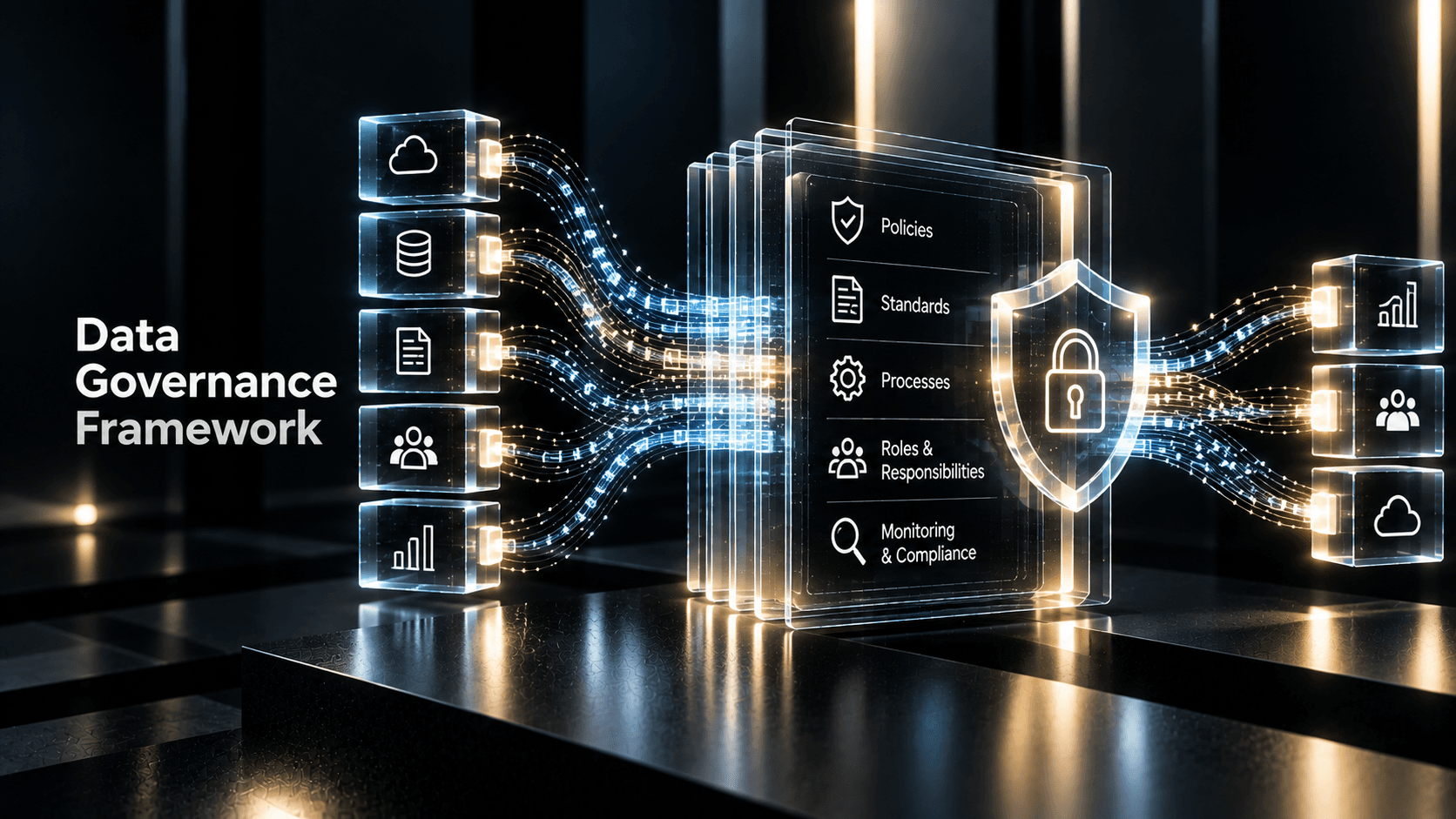
Choosing data governance software is less about finding the longest feature list and more about deciding whether a platform can answer the organisation's real governance questions with evidence and usable control.
How should you choose a data governance platform?
A useful evaluation starts with coverage, context and control: can the platform discover the data you care about, explain who and what can access it, apply policy to that context, and support a governed response when something requires action?
Start with the problems you need to solve
- Find sensitive or unclassified data across connected systems
- Build a searchable data inventory
- Understand data ownership and sensitivity
- See who and what has access to important data
- Identify excessive or policy-violating access
- Understand data movement where telemetry is available
- Apply retention and deletion policies
- Create evidence for governance and compliance reviews
- Control or remediate issues through an approval workflow
Evaluate the data model, not just the dashboard
Governance depends on relationships. A platform should model data assets, systems, people, applications, service identities, AI systems, policies and observed events in a way that lets teams reason about the connections between them rather than inspect disconnected records.
Ask how access intelligence works
A simple list of users is not enough. Useful access governance should explain who or what has access, what permission is involved, which data it reaches, where the permission came from and which policy applies.
Check enforcement boundaries
No platform can honestly promise universal real-time enforcement across every enterprise system. Ask which sources provide event-driven telemetry, which are periodically synchronised, and which actions can actually be executed through an integration. A strong product should expose those differences instead of hiding them.
Look for governed action
For sensitive changes, the most useful pattern is not “AI fixes everything automatically”. It is a controlled lifecycle: identify a problem, propose a change, evaluate policy, obtain approval where required, execute, verify the result and create an audit record.
- Discovery
- Can the platform inventory relevant enterprise data?
- Classification
- Can it distinguish sensitive, personal, financial and business data with visible confidence?
- Access intelligence
- Can it explain who and what can reach the data and through which permission?
- Policy
- Can governance rules be evaluated against real assets and activity?
- Control
- Can approved remediation be executed where integrations support it?
- Audit
- Are requests, approvals, execution and outcomes traceable?
Where Sentinel is positioned
Sentinel is an enterprise data governance and control product focused on discovery, classification, access intelligence, policy, governed action and audit across connected systems. AI systems are treated as one governed actor category alongside people, applications and services rather than as a separate product category.
Continue with a practical data governance framework or see Sentinel.